Integrated Manufacturing for Maximum Quality, Flexibility and Reliability
The production of high-quality induction bends requires far more than just the actual bending process.
Materials, heat treatment, quality requirements and documentation must be coordinated throughout the entire process chain.
BENDS and WELDS brings together the key manufacturing, testing and logistics processes within its own group.
This enables us to reduce interfaces, increase flexibility and ensure the reliable fulfilment of demanding customer requirements.
Manufacturing process
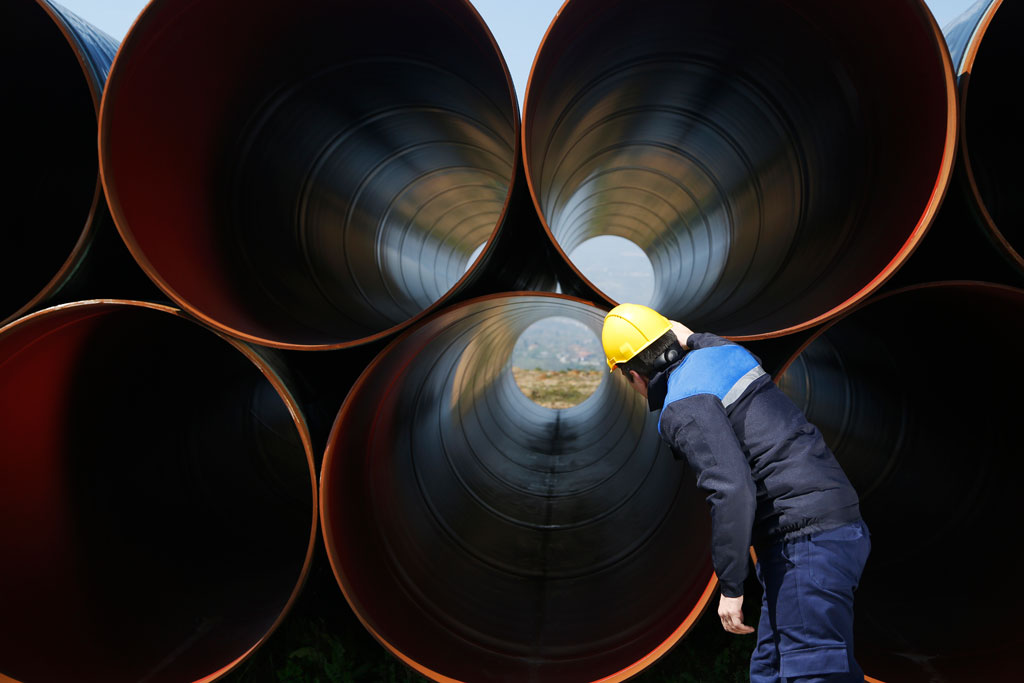
To meet our customers’ high standards, we set the highest quality standards for the raw material right from the start. Depending on the application and project specifications, we select the appropriate mother pipe for the production of the induction bends.
Upon delivery, every steel pipe is inspected. The individual bends are then allocated to the pipes. The pipes are marked out in accordance with the project-specific bend geometry and prepared for the bending process.
This forms the basis for full traceability throughout the entire manufacturing process.
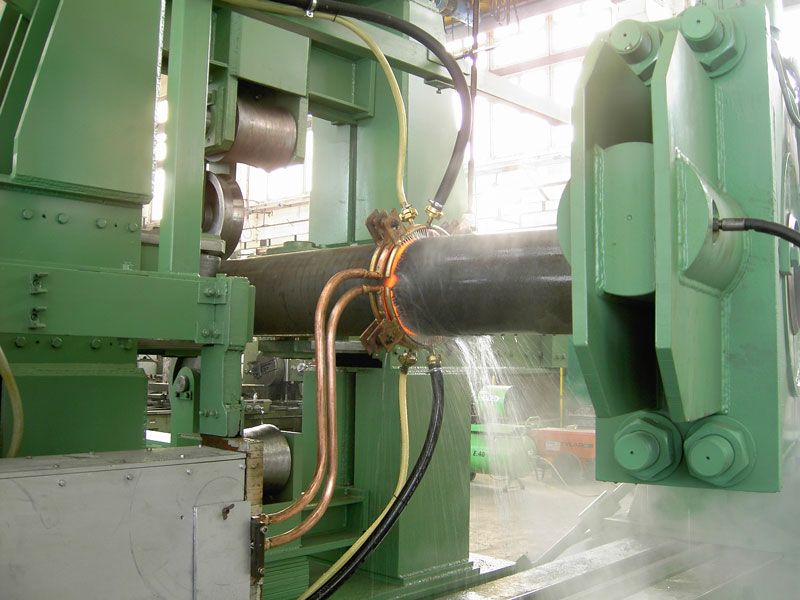
The induction bending process forms the core of our manufacturing. In this process, a narrow zone of the pipe is heated using a ring-shaped inductor under precisely controlled temperature conditions.
After heating, the pipe is fed through the inductor at a constant speed. Deformation occurs exclusively in the heated zone, whilst the adjacent cold areas act as stabilisers, enabling bending without internal tools.
The precise control of temperature, feed rate and bending movement results in induction bends with high dimensional accuracy and tight tolerances.
BENDS and WELDS has three induction bending machines at its production site in the Czech Republic and has continuously refined the process over decades. Extensive experience and databases enable the company to process a wide variety of materials, pipe types and dimensions.
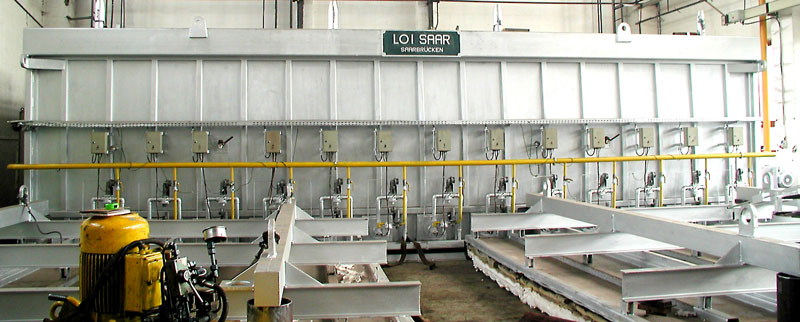
Depending on the material and application, heat treatment may be required to ensure the required mechanical properties.
BENDS and WELDS has many years of experience and extensive databases relating to heat treatment. Our gas-fired annealing furnace is equipped with 26 high-speed burners, four automatic temperature control loops and a large working chamber, enabling even large and bulky workpieces to be treated uniformly.
The result is reliable compliance with the required mechanical properties in accordance with the relevant project specifications.
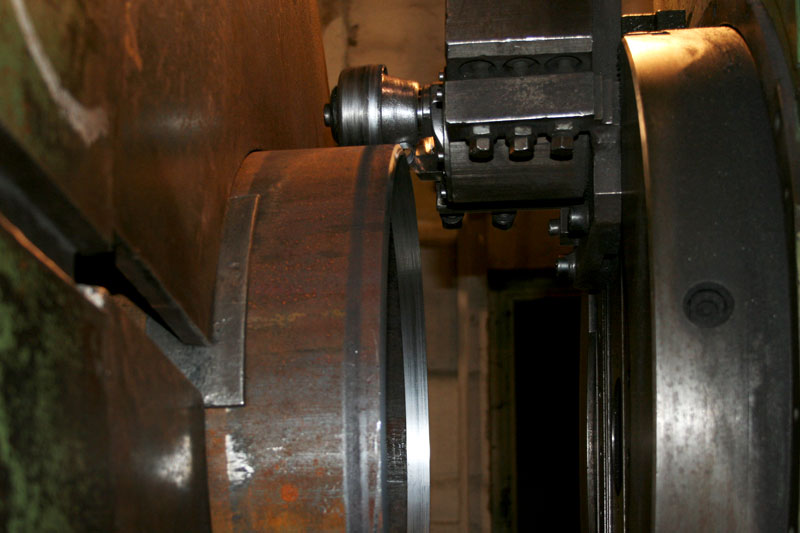
Depending on customer requirements, we machine the pipe ends on our high-performance end-machining machines in accordance with the requirements for subsequent circumferential welding.
All standard weld edge geometries can be produced, tailored to the respective wall thickness of the connecting pipe. Furthermore, pipe ends can be machined to a cylindrical shape or adjusted to specified diameters.
In accordance with project requirements, we carry out both non-destructive and destructive tests during and after the manufacturing process.
The type and scope of the tests are determined by the relevant national and international standards, customer specifications and the intended application.
Before delivery, every induction-bent component also undergoes a final quality inspection.
During this process, we verify compliance with all project-specific requirements regarding geometry, material, marking and documentation.
Typical components of the final acceptance inspection are:
- Dimensional inspection
- Visual inspection
- Marking inspection
- Documentation review
In addition, we carry out third-party inspections in accordance with customer requirements in collaboration with internationally recognised inspection and certification bodies such as TÜV, Bureau Veritas, DNV, Lloyd’s Register, Vinçotte, Apragaz and UDT.
Various internal and external coatings can be applied to protect against corrosion and mechanical stress, or to optimise surface properties.
BENDS and WELDS has its own blasting and coating facilities for this purpose and offers a comprehensive range of services, including:
- Descaling and cleaning using grit blasting
- Temporary corrosion protection
- Painting and priming
- External plastic coating (e.g. PUR)
- Internal coating (e.g. epoxy resin)
The choice of coating depends on the specific operating conditions and project specifications.en.
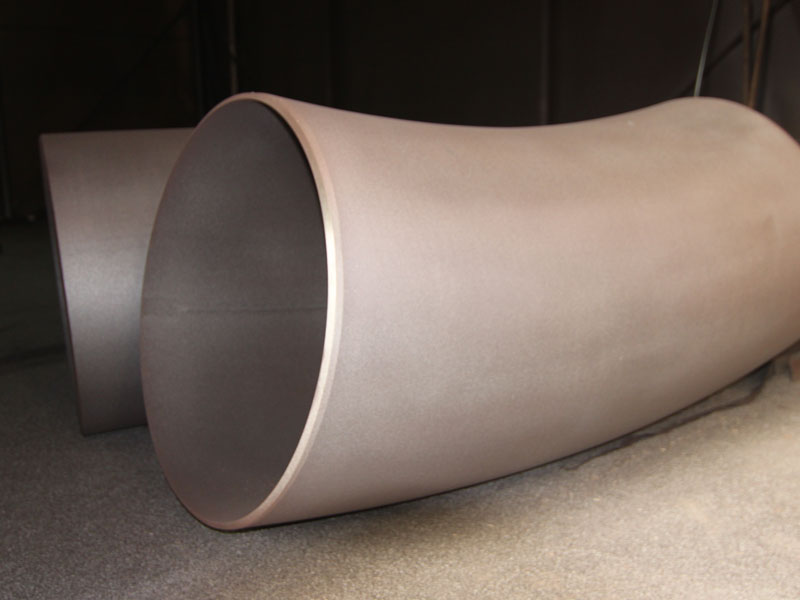
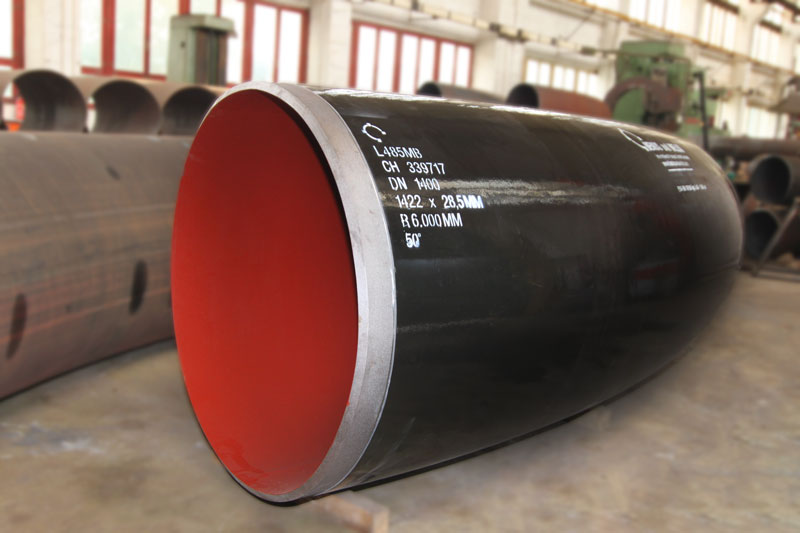
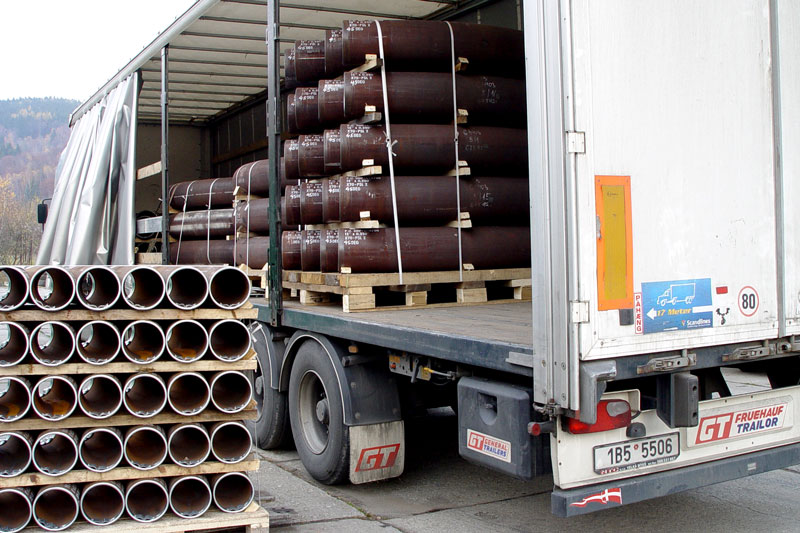
The finished induction bends are usually dispatched by lorry. The products are loaded securely for transport and, where necessary, fitted with suitable protective measures for transport and storage. We also offer bespoke packaging solutions on request.
Throughout the entire manufacturing process, all relevant data for each individual bend is recorded in our system. Our customers receive comprehensive documentation, which enables full traceability of all manufacturing and testing steps.
Depending on the project requirements, the documentation may include:
- Raw material certificates
- 3.1 or 3.2 certificates in accordance with DIN EN 10204
- Bill of materials
- Heat treatment diagrams
- Non-destructive testing reports
- Results of mechanical and technological tests
- Dimensional reports
- Coating certificates